Aranya Art Center announces the “careStation” project: Unlike the traditional museum collection, which is often led by the institution and driven by art history or theoretical research, the collection of the Aranya Art Center is initiated by the artists, starting from a more practical and emotionally driven consideration—the appreciation and care for commissioned works.
Since its establishment, Aranya Art Center has commissioned artists to create new works or new versions of past works for exhibitions. However, due to practical reasons, most of these works had to be destroyed after the exhibitions. In some cases, artists proposed to donate their works to the Aranya Art Center. This has provided the center with an opportunity for self-reflection: while continually commissioning new works for exhibitions, have we carefully considered the production mechanisms and the aftermath? Is it not the responsibility of the institution to preserve and care for its commissioned works?
The “careStation” project at the Aranya Art Center was hence born out of these conversations with the artists and the reflections on our own practices. It focuses on preserving and caring for works, with the artist’s consent as a premise, providing a home for works that have no other place to go and were originally set to be destroyed. At the same time, as affiliate branches of the Aranya Art Center continue to open in the coming years, these works will be presented again and are also available for loan to external institutions and projects.
1/
Installation view,
“Alina Chaiderov,”
Aranya Art Center,
2023.8.20 - 10.15,
Photography: Sun Shi
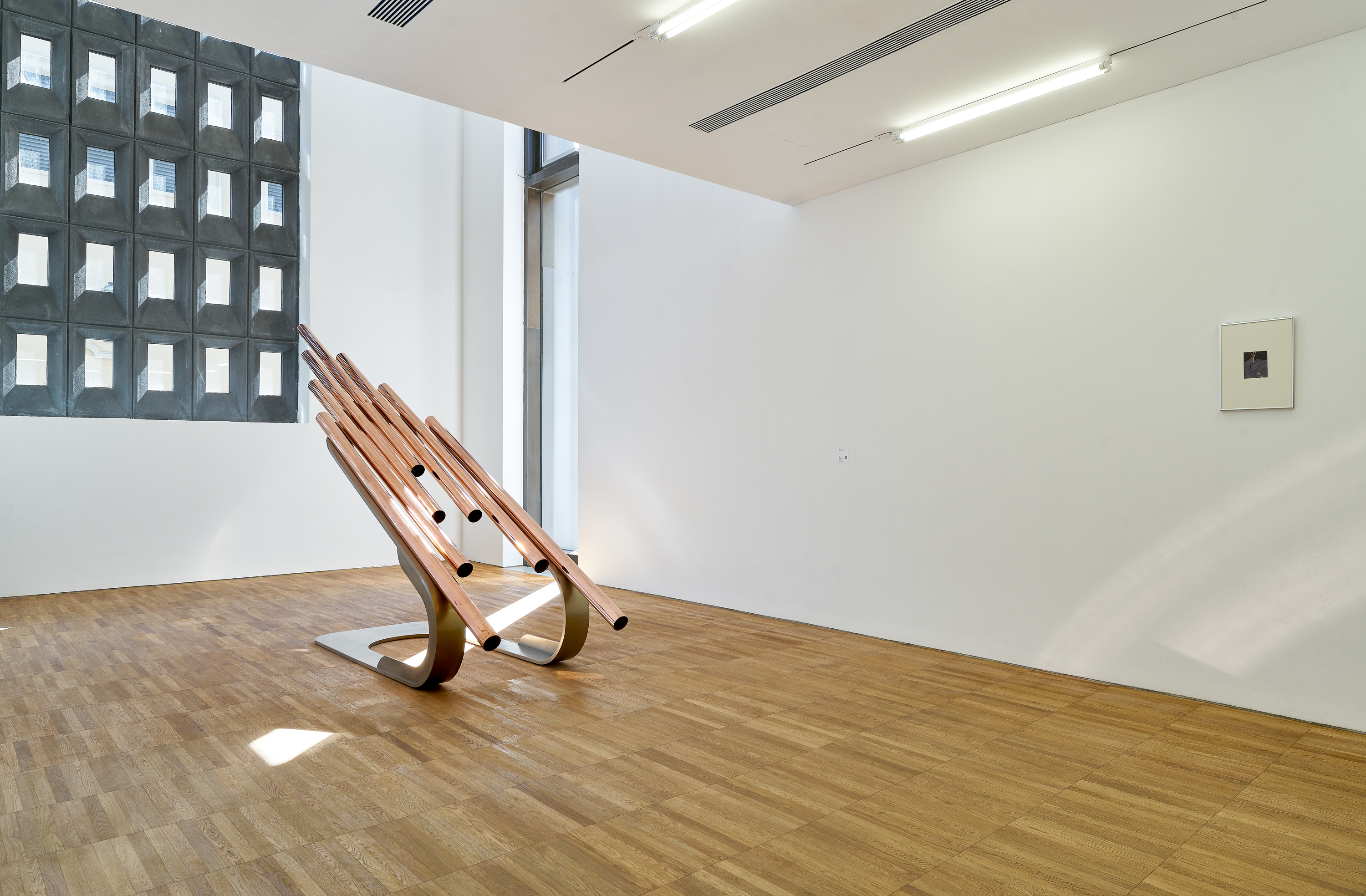
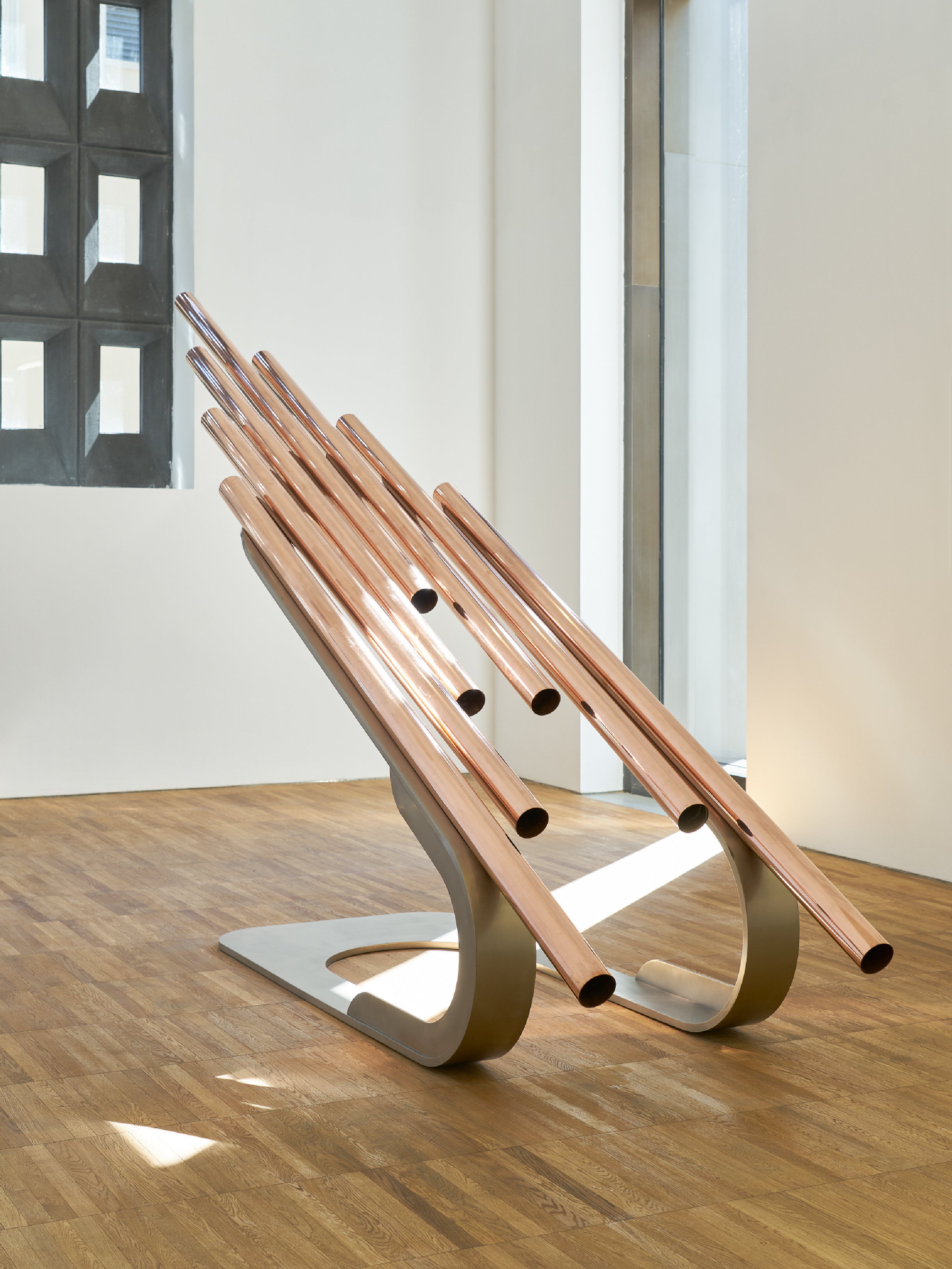
Seven polished copper tubes are held up by a stand, rendering the momentum of impending take-off. As the title suggests, the work aims to stimulate visitors to imagine “where it is going.” The material of the work – copper tube – is exposed and emphasized in the work. Copper, one of the most commonly used materials in Chaiderov’s art practice, is a hazardous and even fatal element for the artist due to suffering from Wilson’s Disease. A patient with such an illness must carefully monitor her daily intake of copper-containing foods; hence, the material represents a personal significance. At the same time, the artist considers copper tubes as an infrastructural material that is hidden in the walls and floors of the urban environment. They are like the human body’s blood vessels, channeling energy from one place to another. In this sense, the minimal treatment of the material expands from its significance in the artist’s body to drawing our attention to a general picture of society and even to a reverie of the vast universe.
.jpeg)
Installation view,
11th ART021 Shanghai Contemporary Art Fair,
BEYOND Public Unit, 2023
2/
Installation view,
“Jiang Zhi: Life,”
Aranya Art Center,
2024.4.17 - 6.30,
Photography: Sun Shi
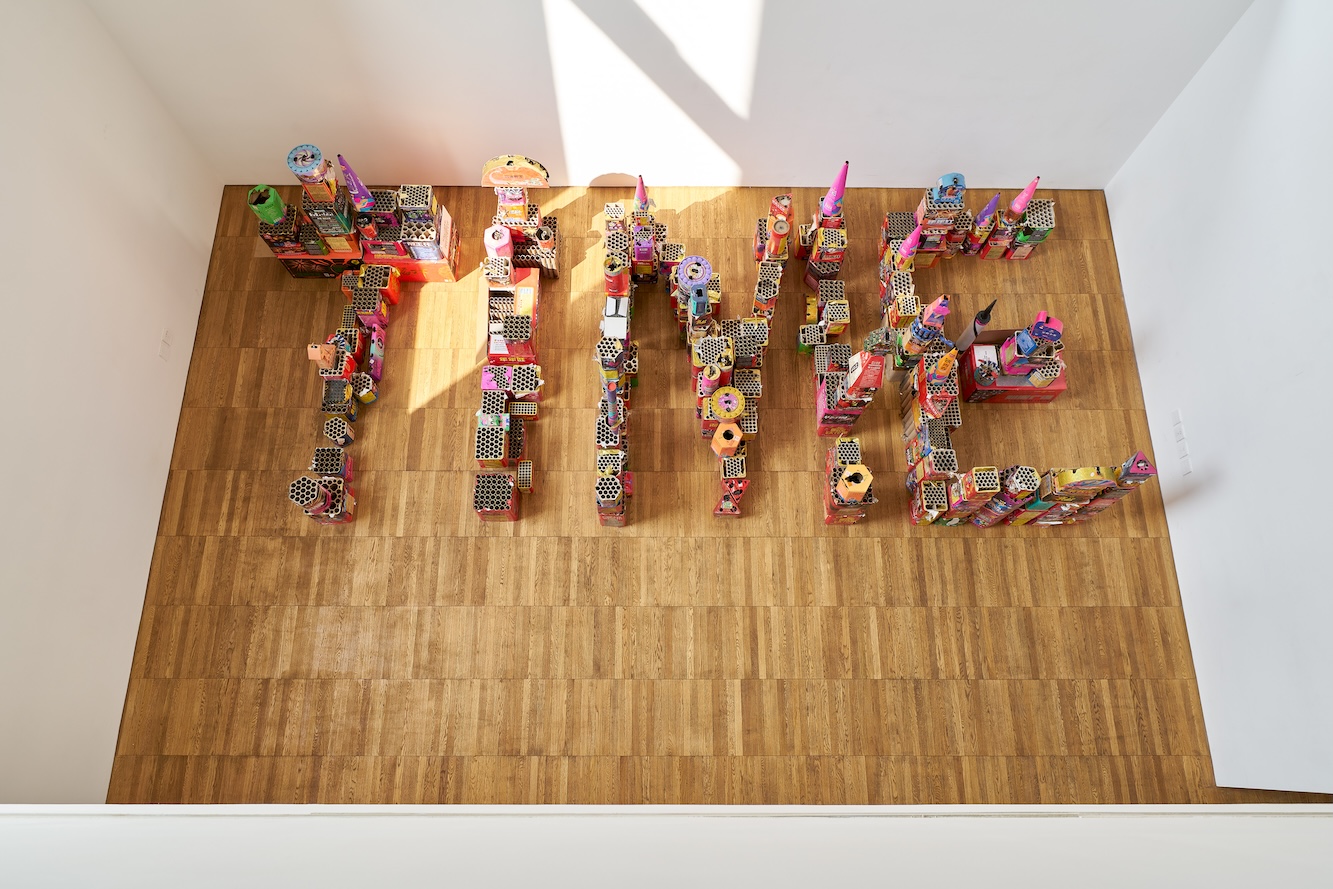
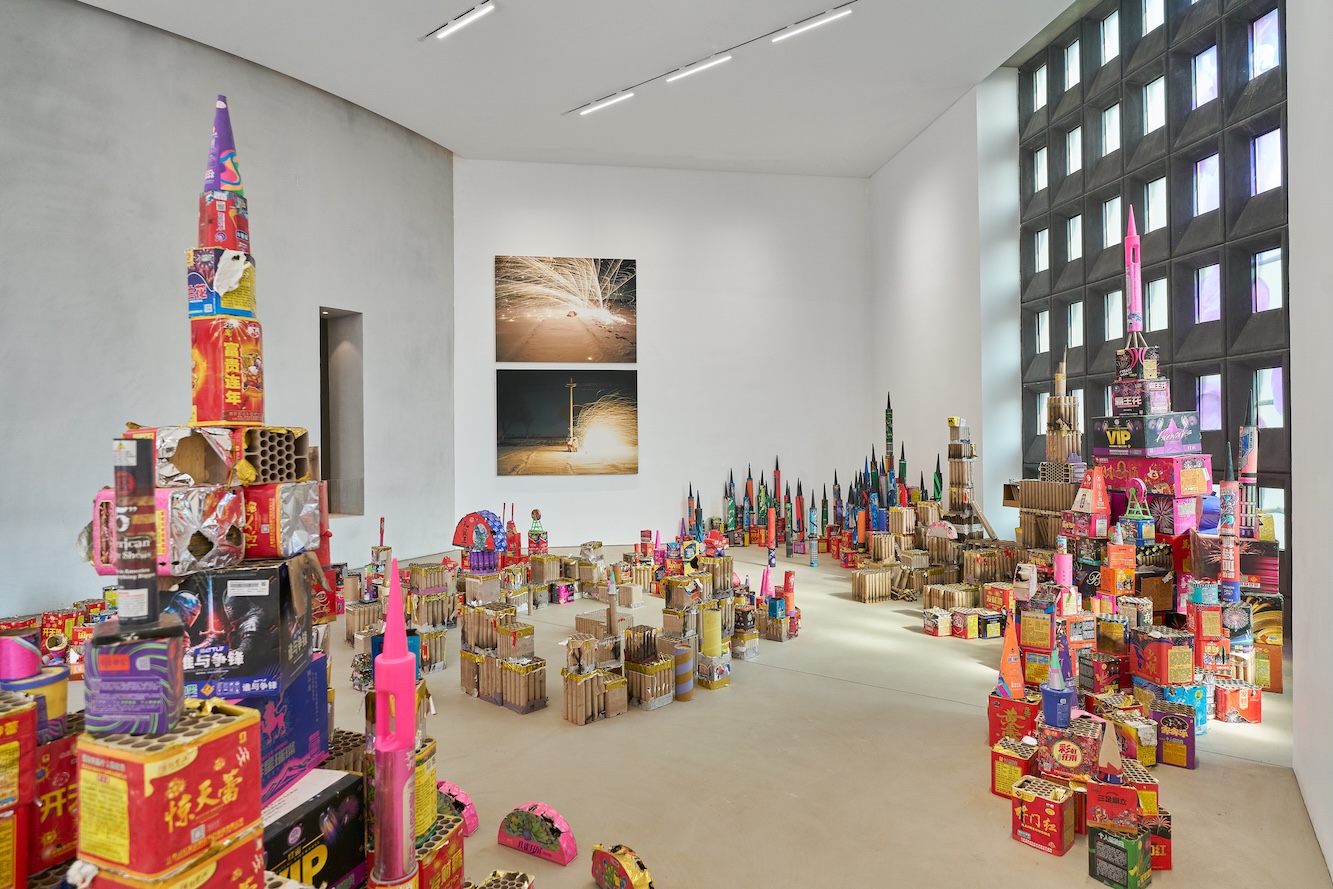
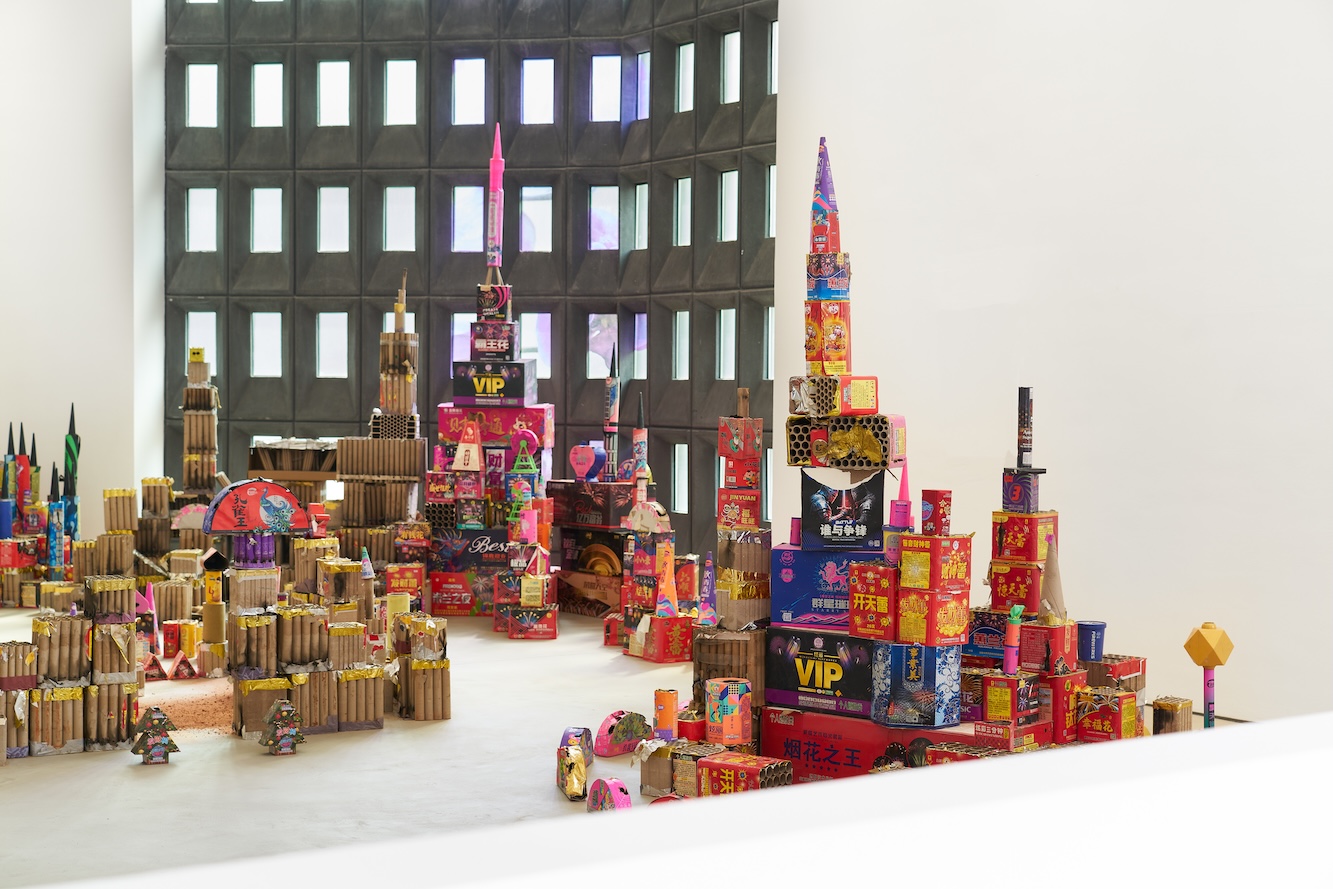
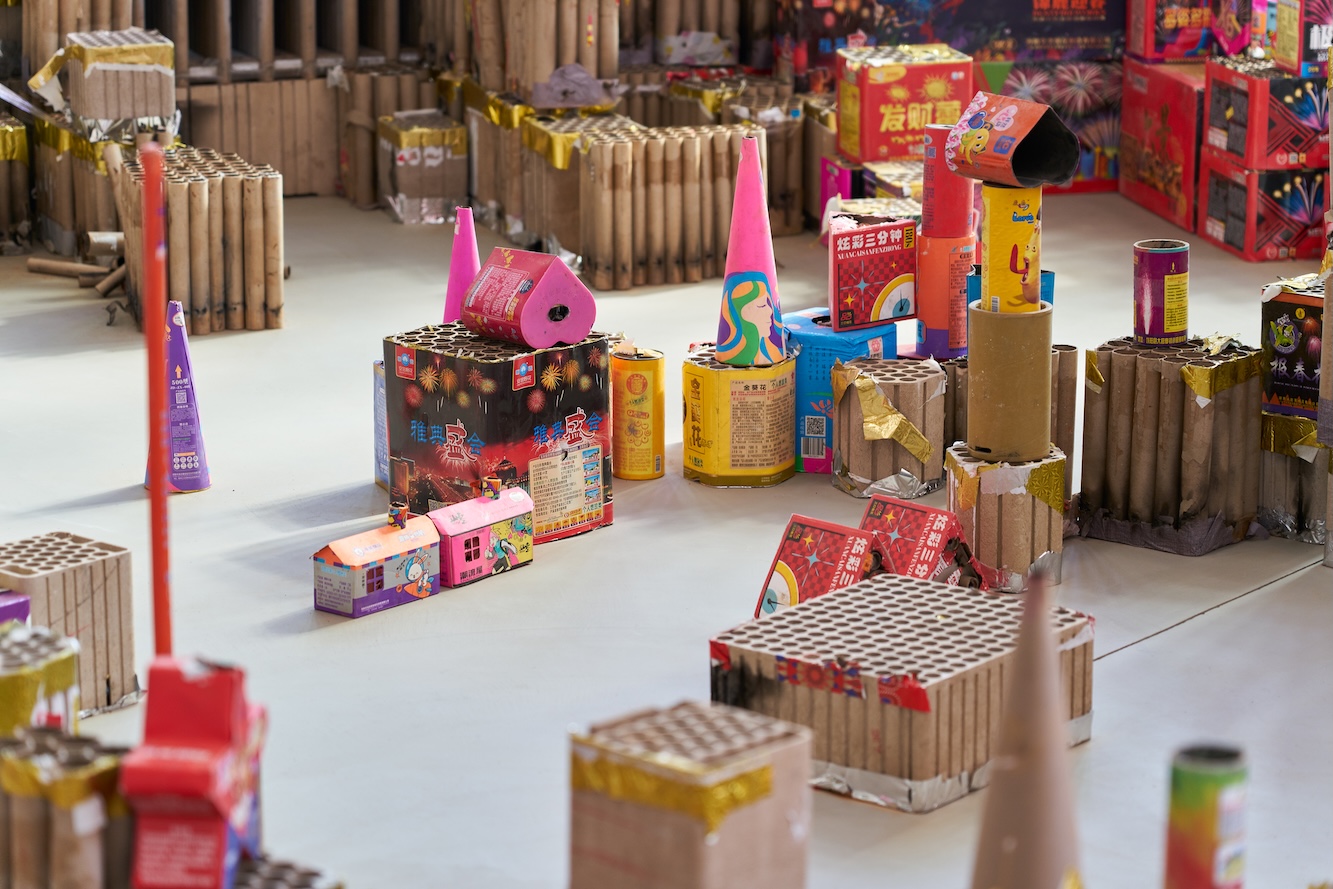
The artist brings the paper firework shells from the public sphere into the exhibition hall and reorganizes them as children’s building blocks. These used shells form a “miniature city,” which, when viewed from above, forms a single, large word: “TIME.” The lingering scent of gunpowder and burned shells become a monument to celebration and personal memories, inspiring us to imagine the splendor, intensity, and implied violence of past glory; although once silence is restored, the word “TIME” redraws our attention to profoundly reflect on temporality and the present day.


3/
Installation view,
“Jiang Zhi: Life,”
Aranya Art Center,
2024.4.17 - 6.30,
Photography: Sun Shi
4/
Installation view,
“Studio Visits,”
Aranya Art Center,
2024.7.14 - 10.13,
Photography: Sun Shi
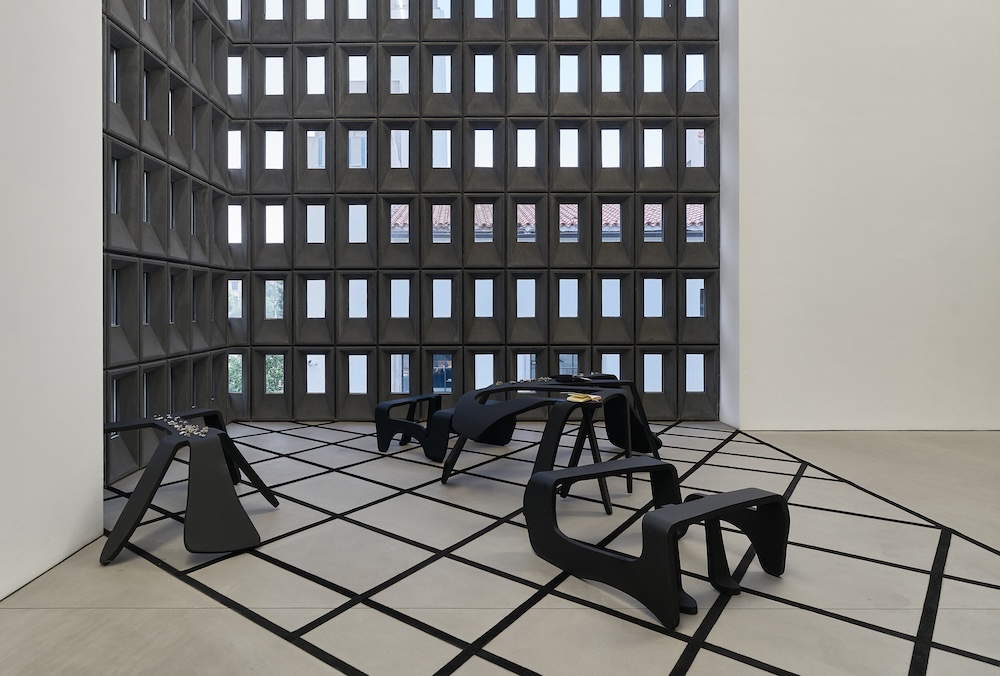
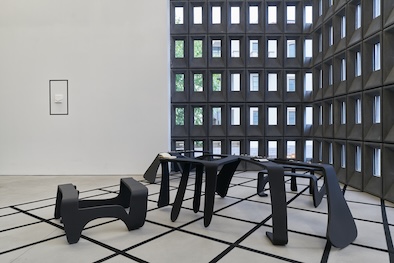
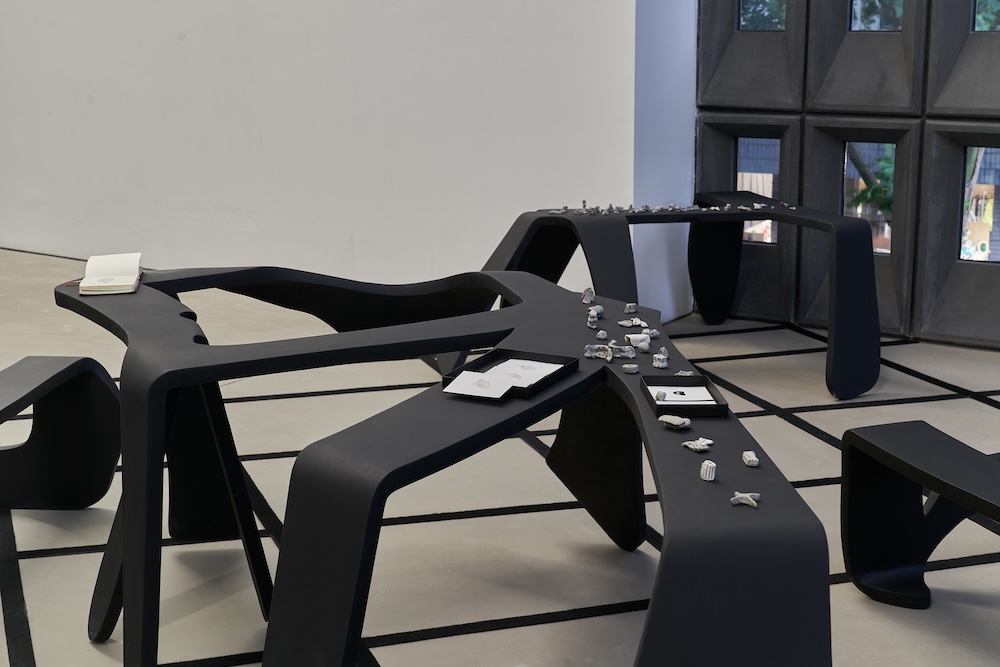
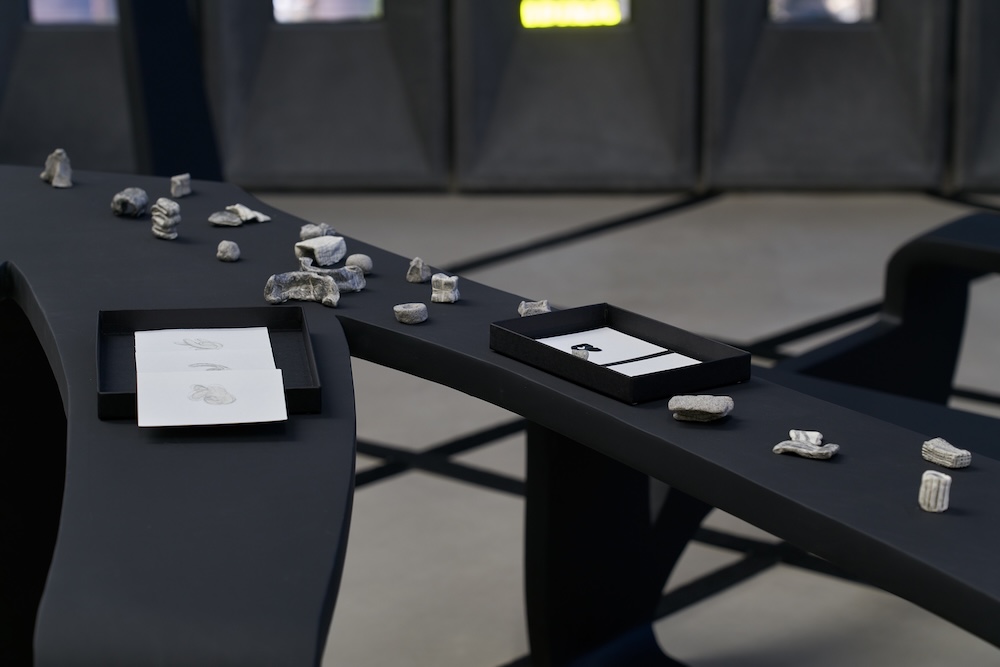
The artist has lived and traveled in numerous countries, and language is an important sign through which she perceives the environment around her. She found inspiration in the orderly structure of Chinese characters and the unique architectural space of the Aranya Art Center, designing a series of furniture sculptures derived from folded Chinese characters. The artist has taken this exhibition as an opportunity to learn Chinese. The characters she has chosen, “目” (“mu,” meaning “eye”), “身” (“shen,” meaning “body”), “土” (“tu,” meaning “earth”), and the character component “亻” (signifying a person or people), are all symbols of our bodies and important elements of our surrounding environment. This furniture set, along with various forms of sketches, and carpets bearing the shadows of window panes, forms a “portable” studio of the artist’s imagination.
5/
Installation view,
“Studio Visits,”
Aranya Art Center,
2024.7.14 - 10.13,
Photography: Sun Shi
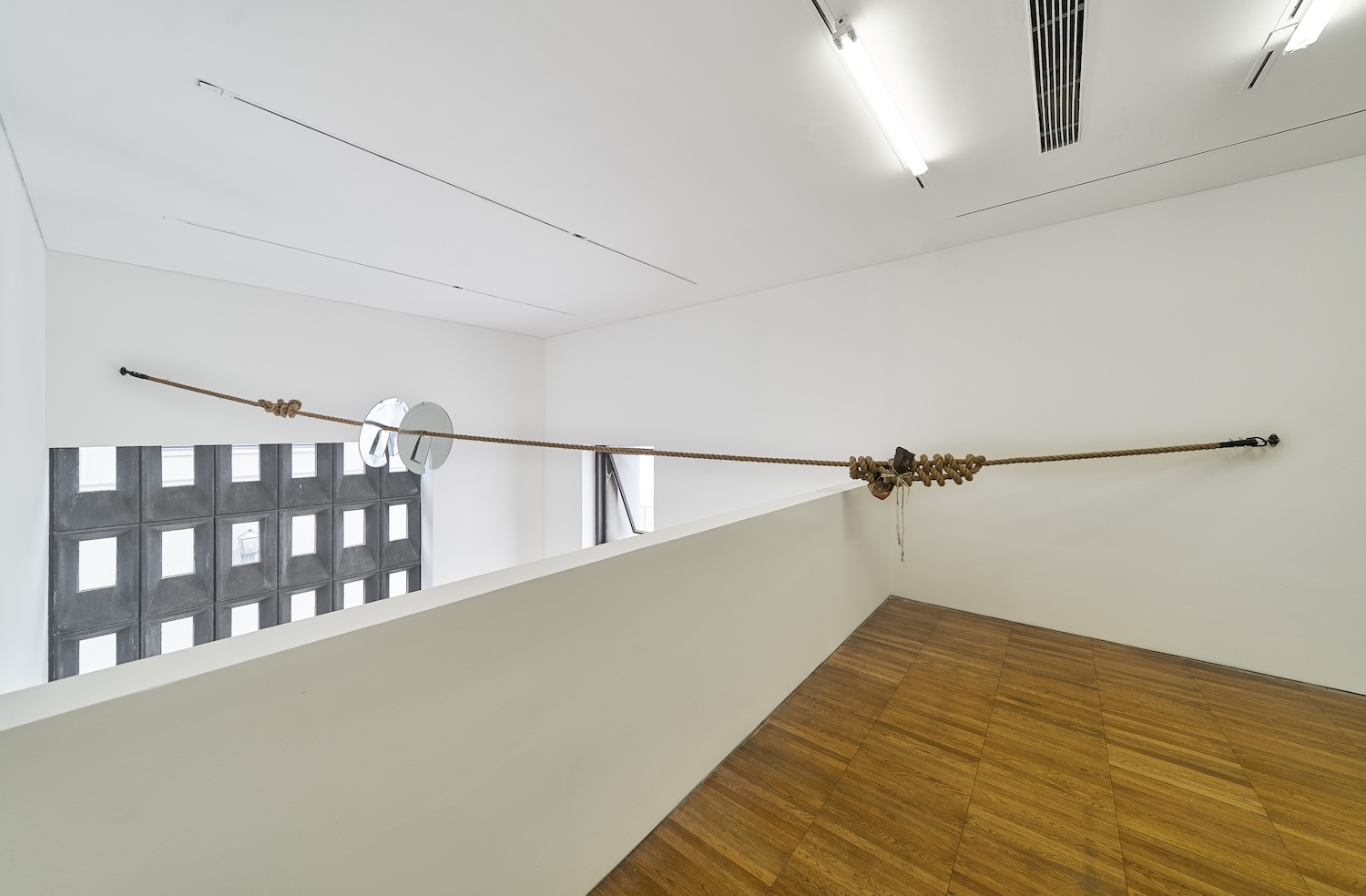
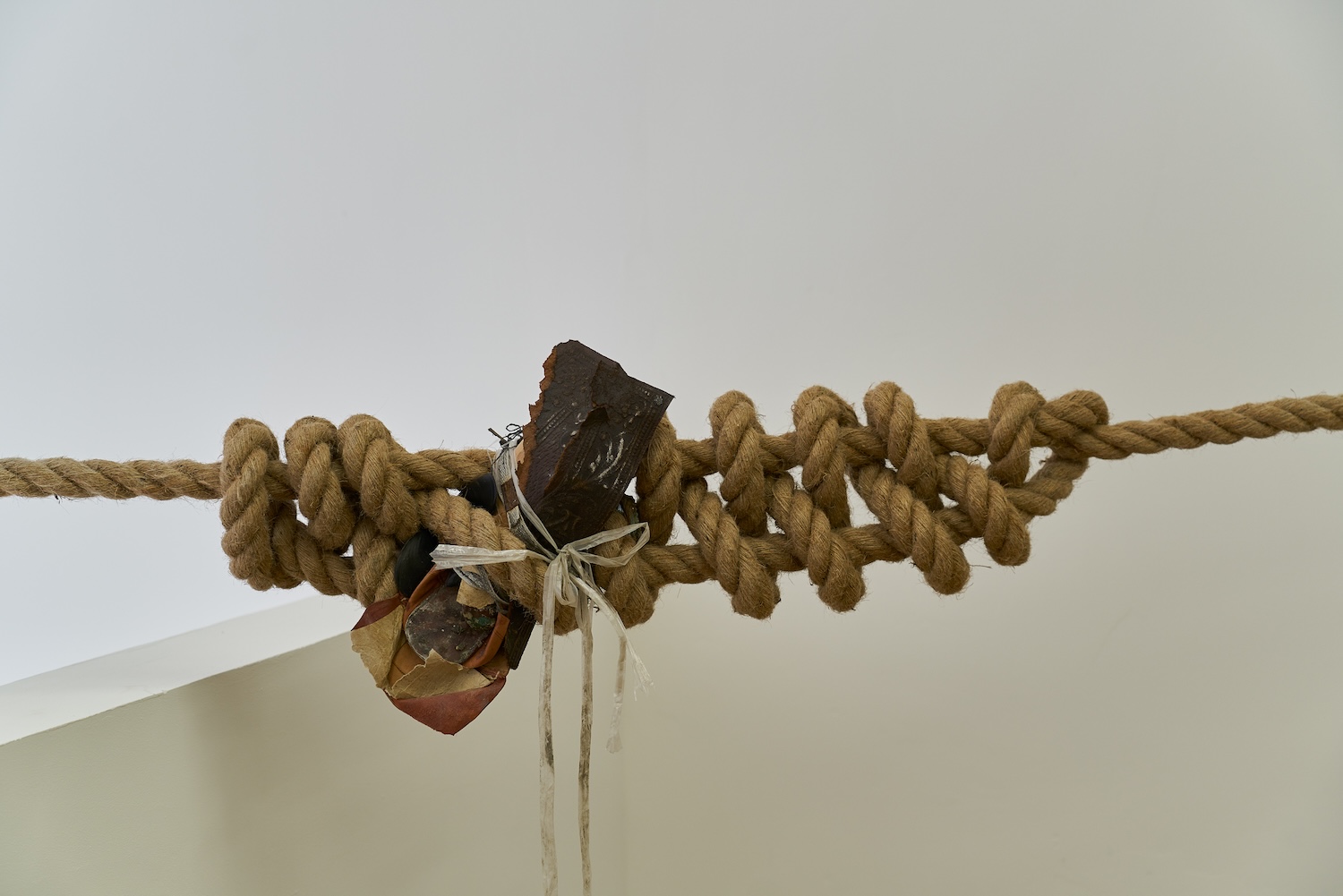
The rat guard is a round board placed on mooring ropes to prevent rats from boarding while a ship is moored to a dock. The artist encountered this in the docks of Amsterdam, and has brought it into the exhibition space to spark our imagination about site and setting. The moored boat is in a temporary, defensive state. The distant journeys of the ship symbolize a richer, more beautiful life, but not everything is welcome aboard.
6/
Installation view,
“Studio Visits,”
Aranya Art Center,
2024.7.14 - 10.13,
Photography: Sun Shi
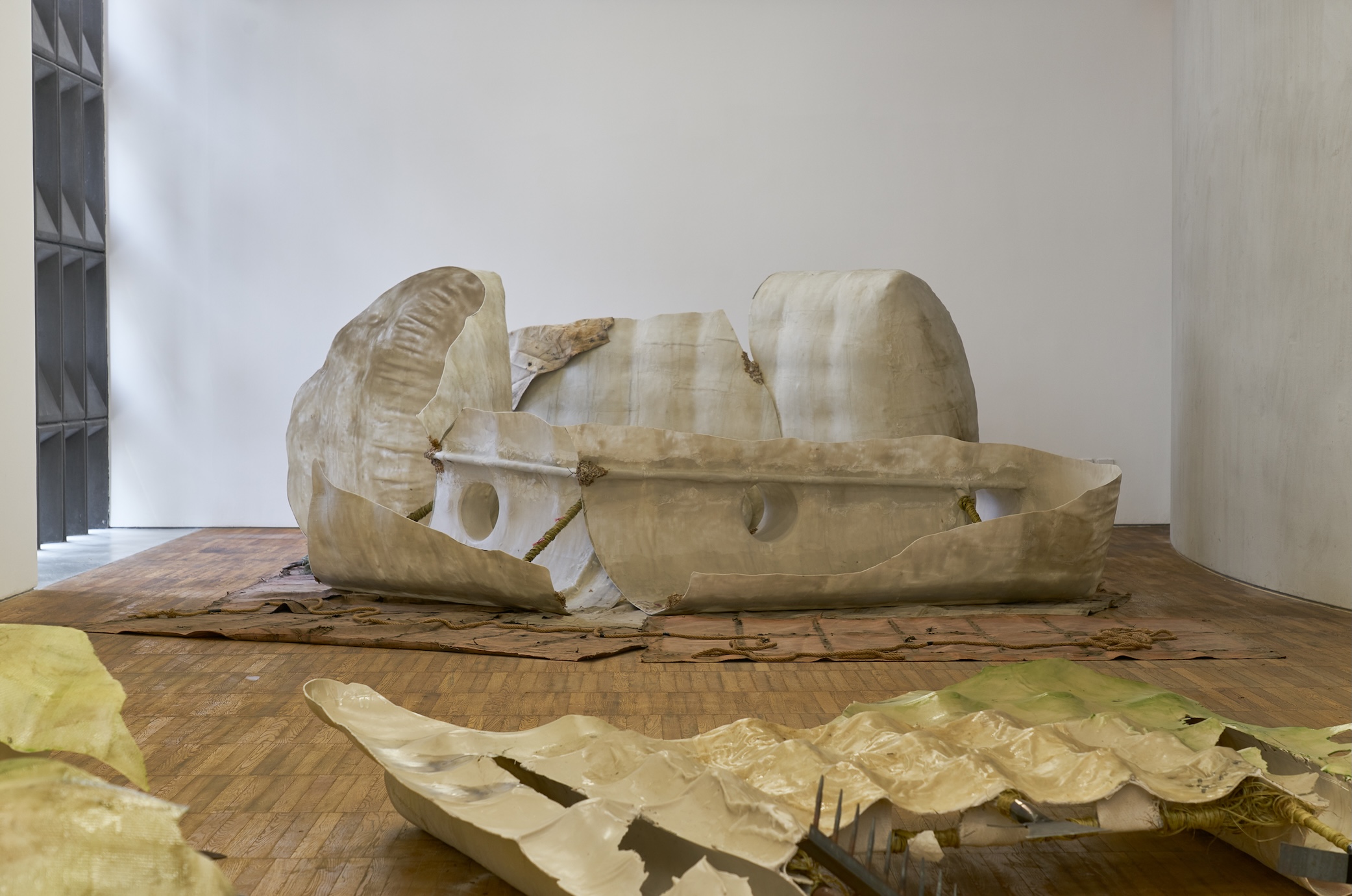
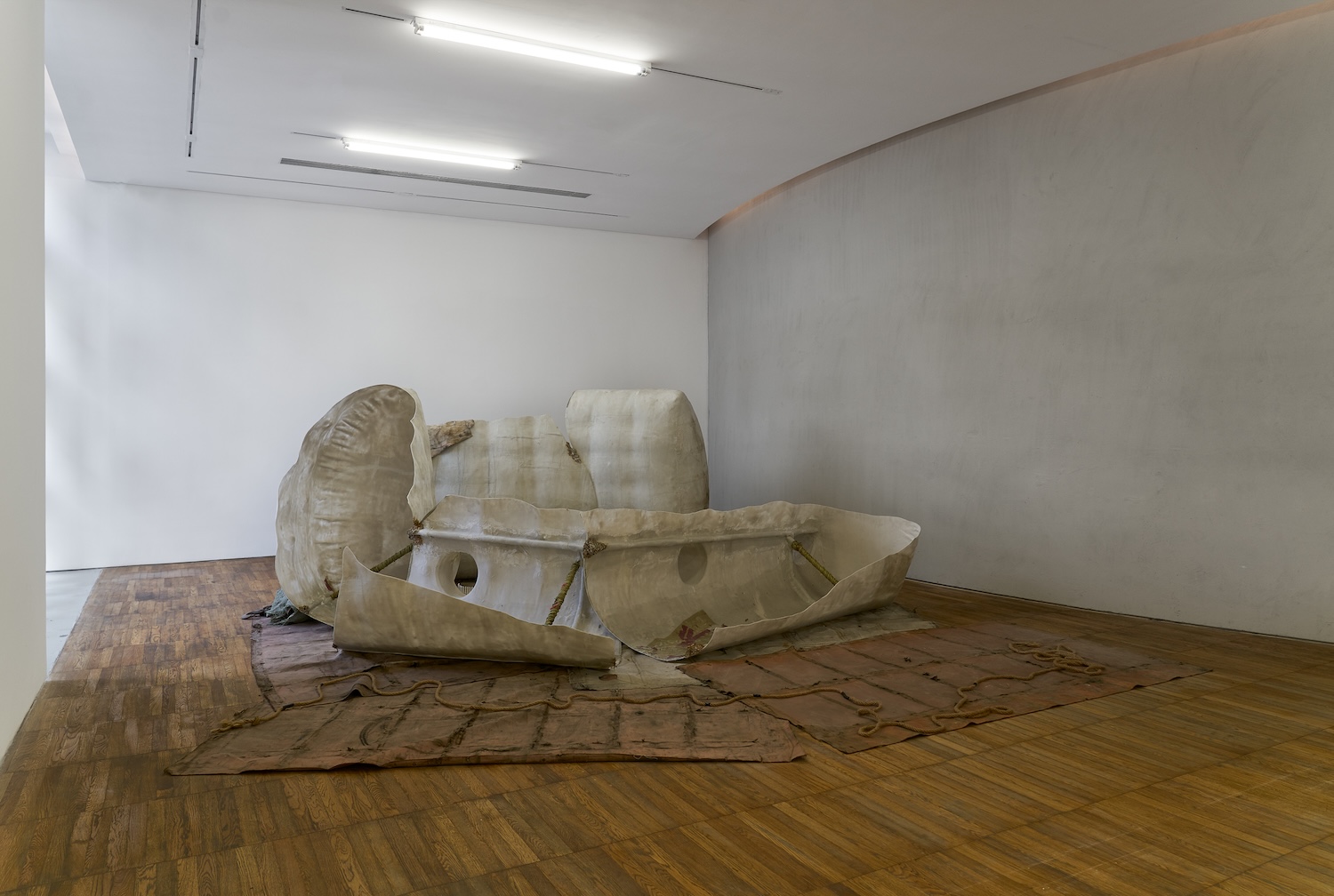
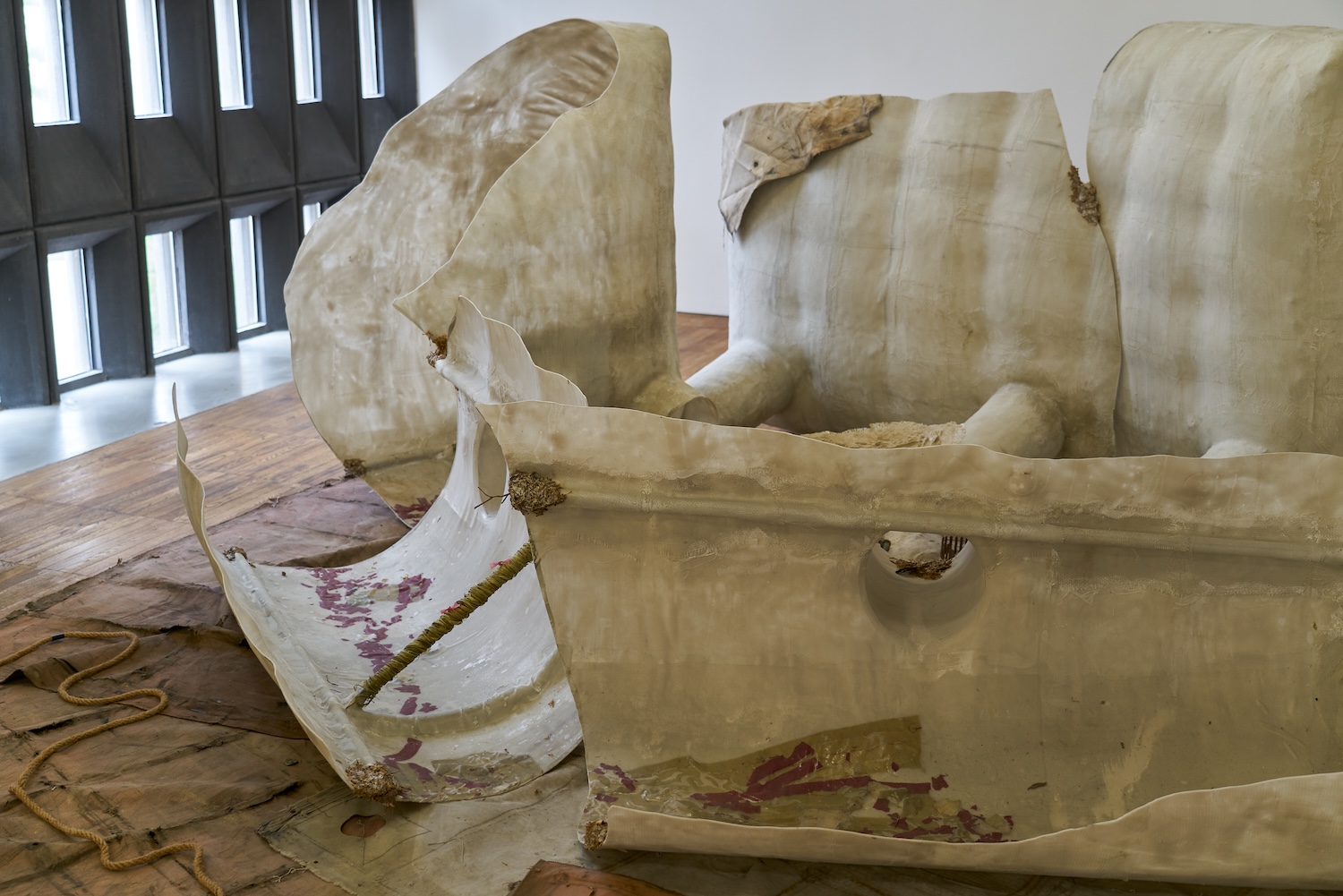
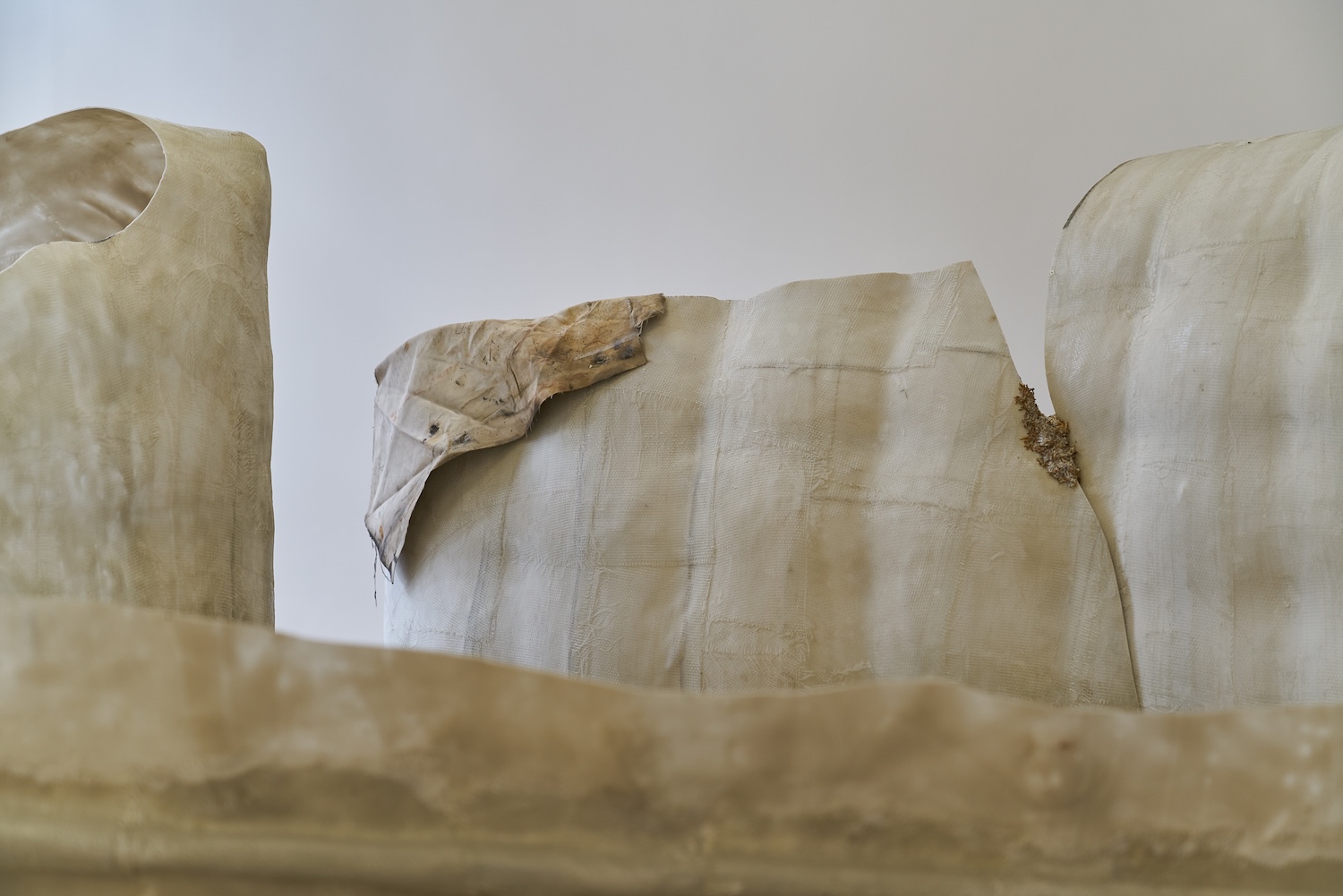
The main shape of the sculpture Remnants of fireworks in a countryside bullring stems from inflatable props used in company team-building exercises and campus sporting events. They often reference nature in their names and forms. The artist is pondering how meadows, seas, cliffs, and other natural scenes are simulated in human activity, emerging as obstacles to be overcome, and conveniently dismantled after use. By casting, cutting, rearranging, and modifying these inflatables and mixing them together with materials from different sources, the artist has restored them as concentrated spectacles, thus composing an unrecognizable, cobbled together simulation.